Open-source project · Uplink Connect
LogFalcon: protect blackbox logs and keep flying
LogFalcon turns a full flight-controller blackbox into a quick pit stop, rather than the end of a session. Built by Uplink Connect for FPV pilots using compatible Betaflight and iNav controllers, it reads the log to a Raspberry Pi, verifies the saved file, frees the controller’s internal flash and gets the pilot back to flying.
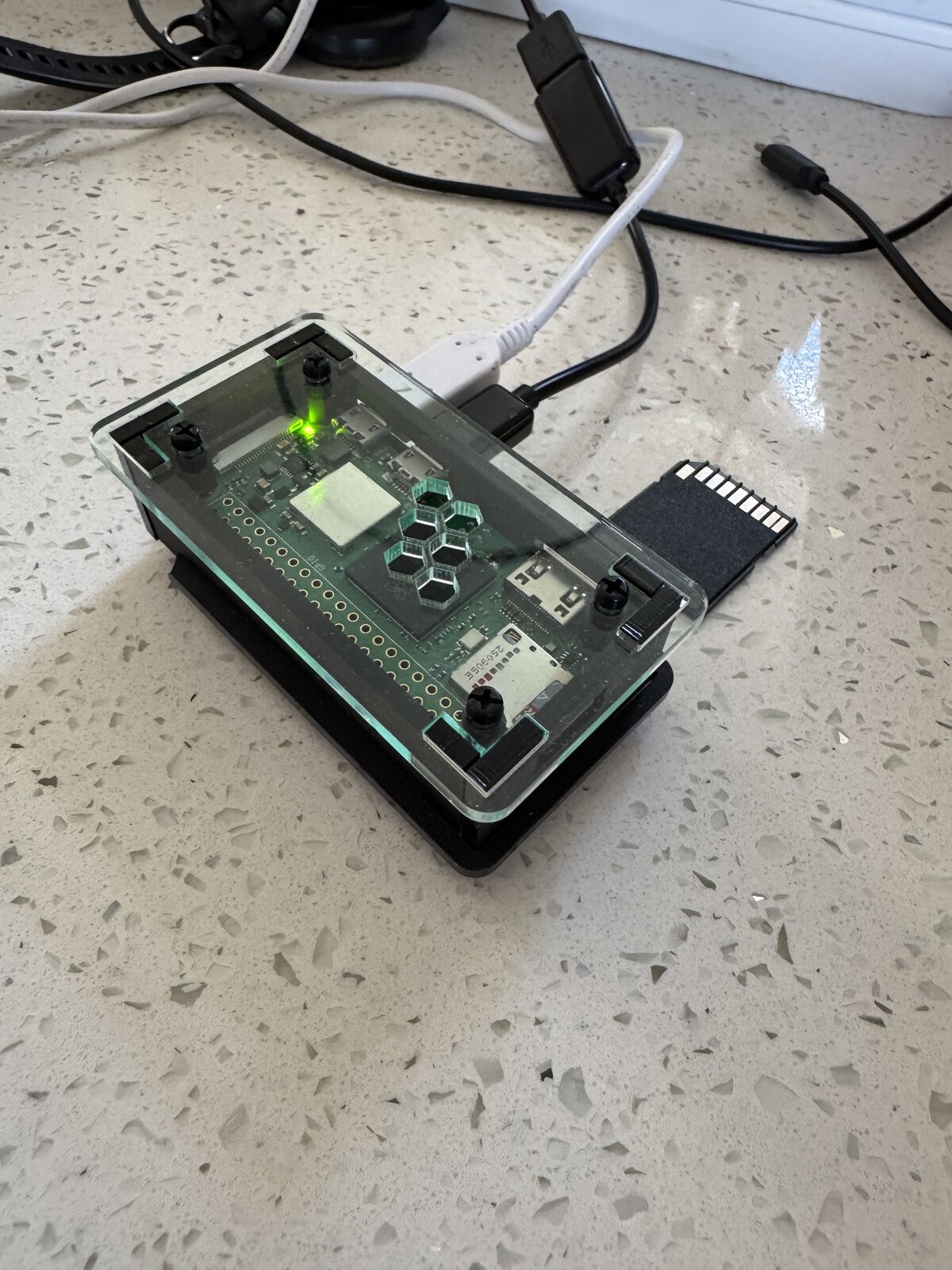
- Hardware-tested
- Tested by Uplink Connect on a Raspberry Pi Zero 2 W with Betaflight AIO and stack flight controllers.
- Compact, field-ready power
- Built around the 65 × 30 mm Raspberry Pi Zero 2 W board; a compatible 5 V / 2.5 A USB power bank can power it away from mains.
- Verified before erase
- The controller is cleared only after the Pi-side blackbox file has been copied and verified with SHA-256.
A full blackbox should not end a flying session
Blackbox logs are one of the best tools an FPV pilot has for understanding an aircraft. They expose the difference between a tune that feels right and one that only looked right on the bench.
But internal flight-controller flash is finite. When it fills, logging stops; retrieving the data and safely clearing the storage can mean breaking out a laptop, configurator and extra equipment in the middle of a session.
LogFalcon makes that interruption small. It is a compact, offline device for moving a valuable log out of the way before it becomes a reason to stop flying.
A blackbox offload device, made for the field
LogFalcon runs on a Raspberry Pi Zero W or Zero 2 W. Built around the Zero 2 W’s 65 × 30 mm board, it keeps the device compact enough for a field kit. Its 5 V power input also allows it to run from a compatible 5 V / 2.5 A USB power bank, so the workflow does not depend on finding a mains socket.
The field workflow is deliberately direct:
- connect the flight controller to LogFalcon;
- follow the device LED while it reads, saves and verifies the log;
- disconnect when the sync is complete and continue flying; and
- download the retained logs later through the device’s own Wi-Fi dashboard.
That narrowness is the point. This is not another general-purpose FPV utility: it is a physical, single-job tool built around the moment a pilot needs the right thing to happen quickly.
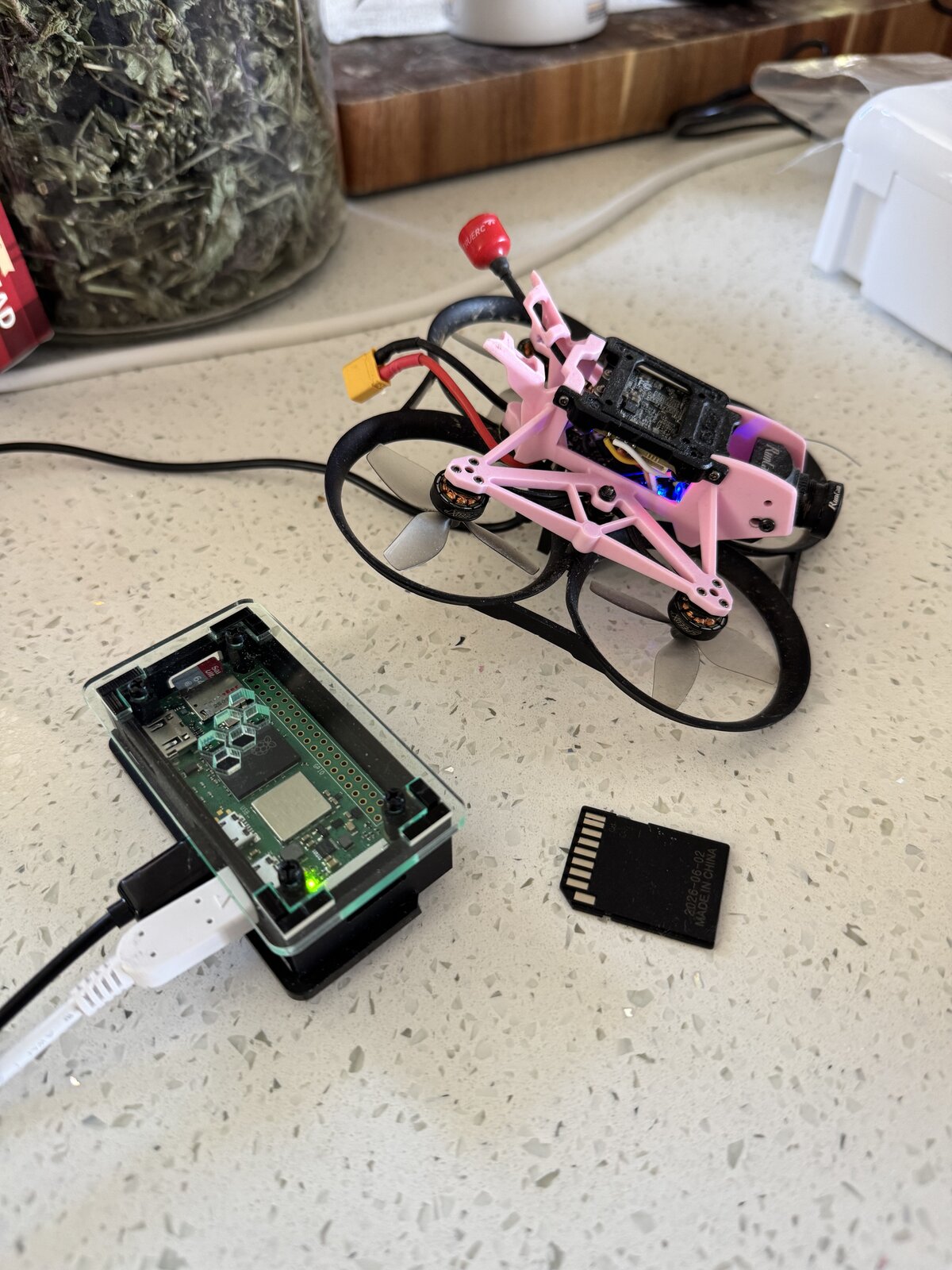
The technical detail is in what it refuses to risk
The central decision was to make erasure the final step, never the default action. LogFalcon copies the blackbox data, verifies the completed file with SHA-256, records the session information, and only then requests that the flight controller flash is cleared.
Around that core, the work solves the practical problems that make small hardware products feel credible: MSP communication, controller detection, compatibility checks, storage handling, LED feedback, a local Wi-Fi dashboard, hotspot behaviour, recovery paths and Raspberry Pi packaging.
More engineering in the box, less friction at the field
LogFalcon replaces a laptop-led maintenance step with a purpose-built field device. It does the technical work quietly, while leaving the pilot with a simple question: is the log safe and can I fly again?
It is a small product with a serious systems problem inside it: embedded communication, file integrity, recoverable storage management, physical feedback and an offline interface all have to agree before the experience can feel effortless.
LogFalcon is designed for compatible Betaflight and iNav internal SPI-flash blackbox workflows. It does not retrieve logs stored on a flight controller’s own SD card.
Have a related project?
Share the site, system or result you need help with.