Technical project · Uplink IT & Networks
From limited fixed-line broadband to high-speed rural connectivity
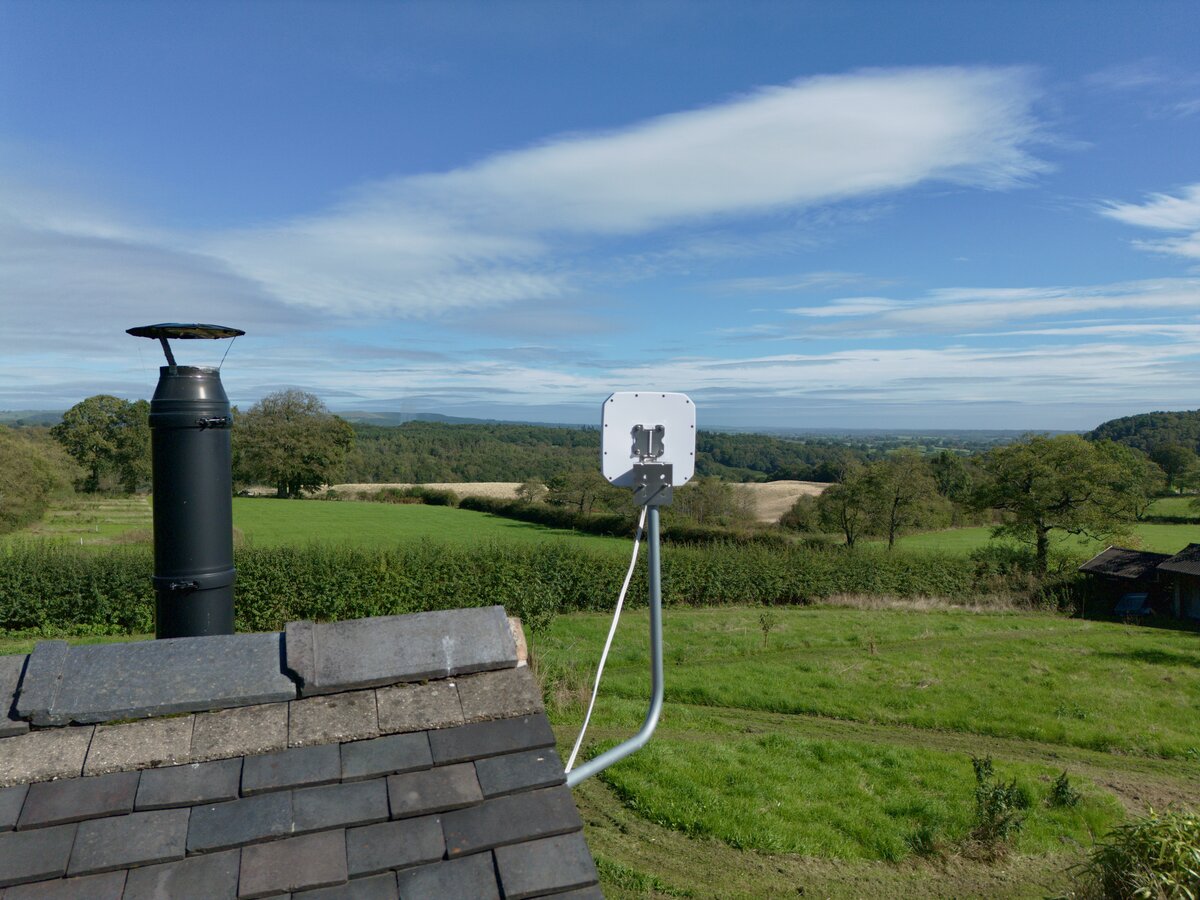
With faster fibre unavailable, a rural Staffordshire property moved from an approximately 5 Mbps fixed-line connection to a measured 5G download speed of approximately 500 Mbps. A wired network and four carefully positioned access points provide reliable Wi-Fi throughout the large property.
- Approximately 5 → 500 Mbps
- Measured download speed after moving from the limited fixed-line service to 5G.
- Four wired access points
- Wi-Fi coverage planned around the building rather than relying on a single router.
- 10+ year network foundation
- The wired and Wi-Fi foundation has supported successive equipment and connectivity upgrades.
The requirement
The property needed a dependable internet connection and consistent Wi-Fi coverage throughout the house.
Its existing BT broadband service, delivered over the Openreach network, provided no more than approximately 5 Mbps. The distance from the street cabinet limited the connection, and a faster fibre service was not available at the location.
Improving the service therefore required both an alternative internet connection and a network capable of distributing it reliably around the property.
The network foundation
A wired network and multi-access-point Wi-Fi system were designed and installed more than ten years ago.
Four access points were positioned around the property and connected individually using outdoor-rated Cat6 Ethernet. The cabling was terminated and the network equipment configured as part of the project.
This wired foundation has remained reliable for more than a decade. It has also allowed internet connections, access points and other network equipment to be upgraded without rebuilding the underlying network.
The connectivity upgrade
When the fixed-line service was no longer adequate, available mobile networks and antenna configurations were tested at the property before replacement equipment was selected.
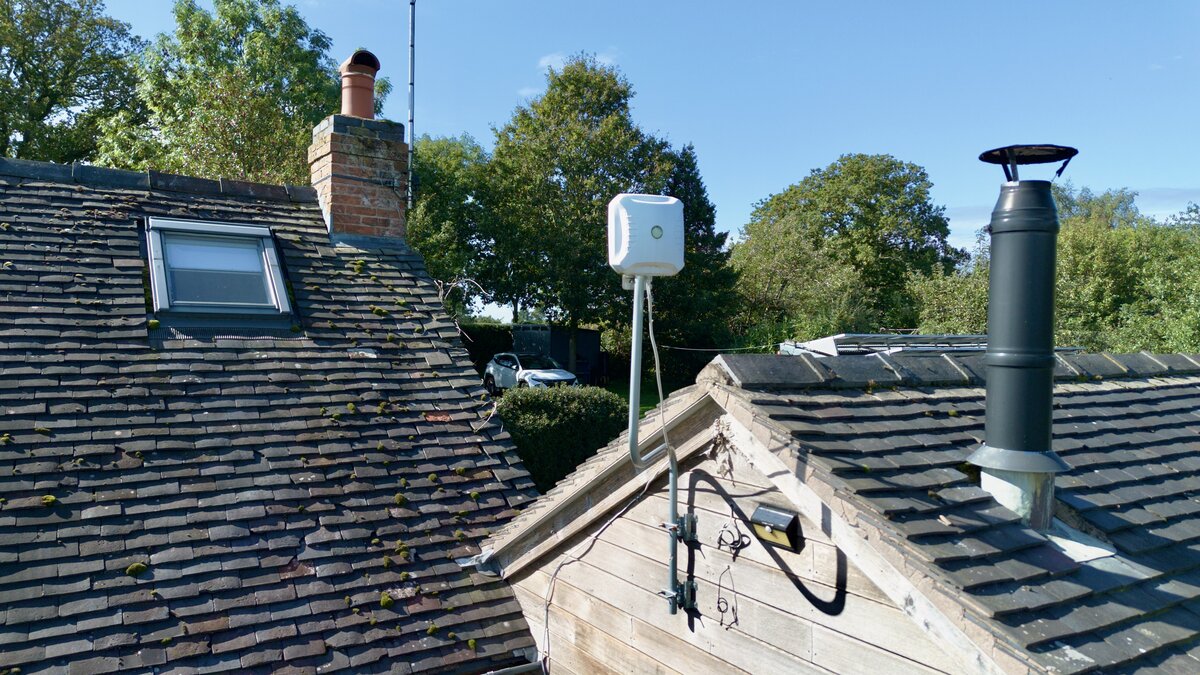
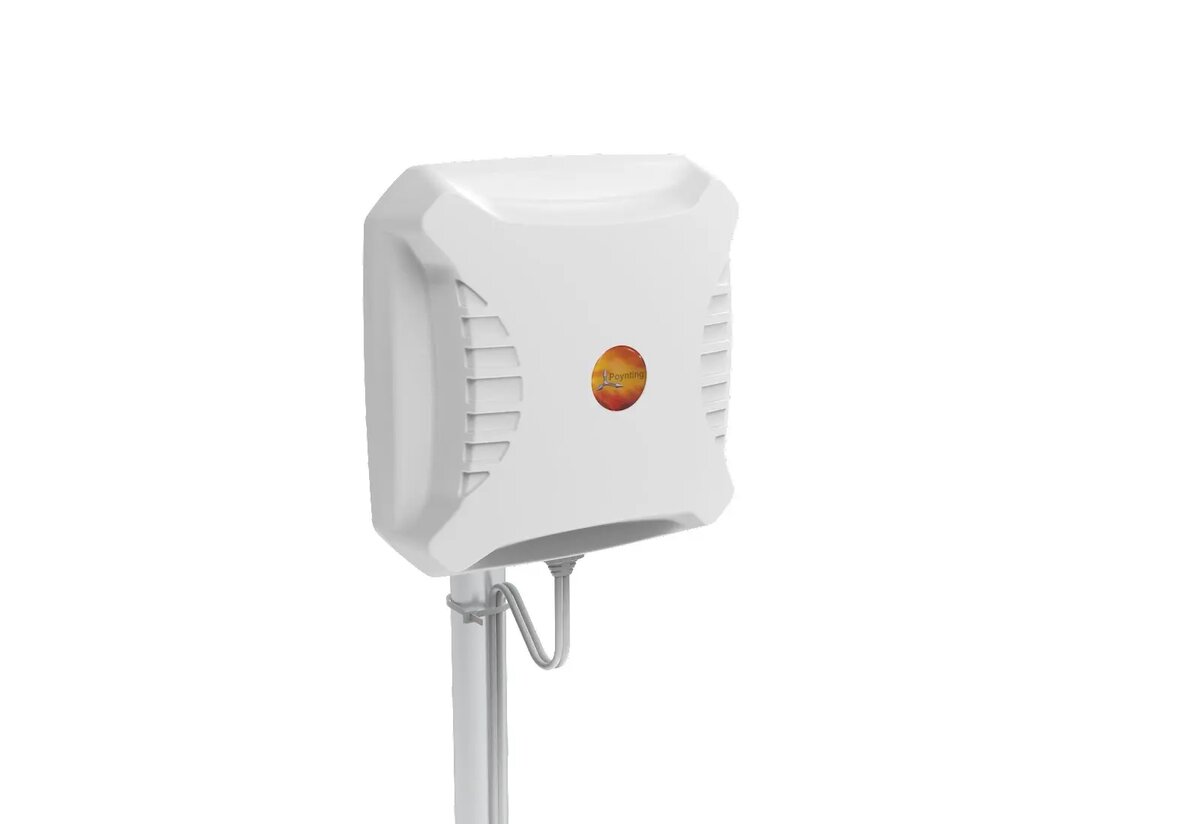
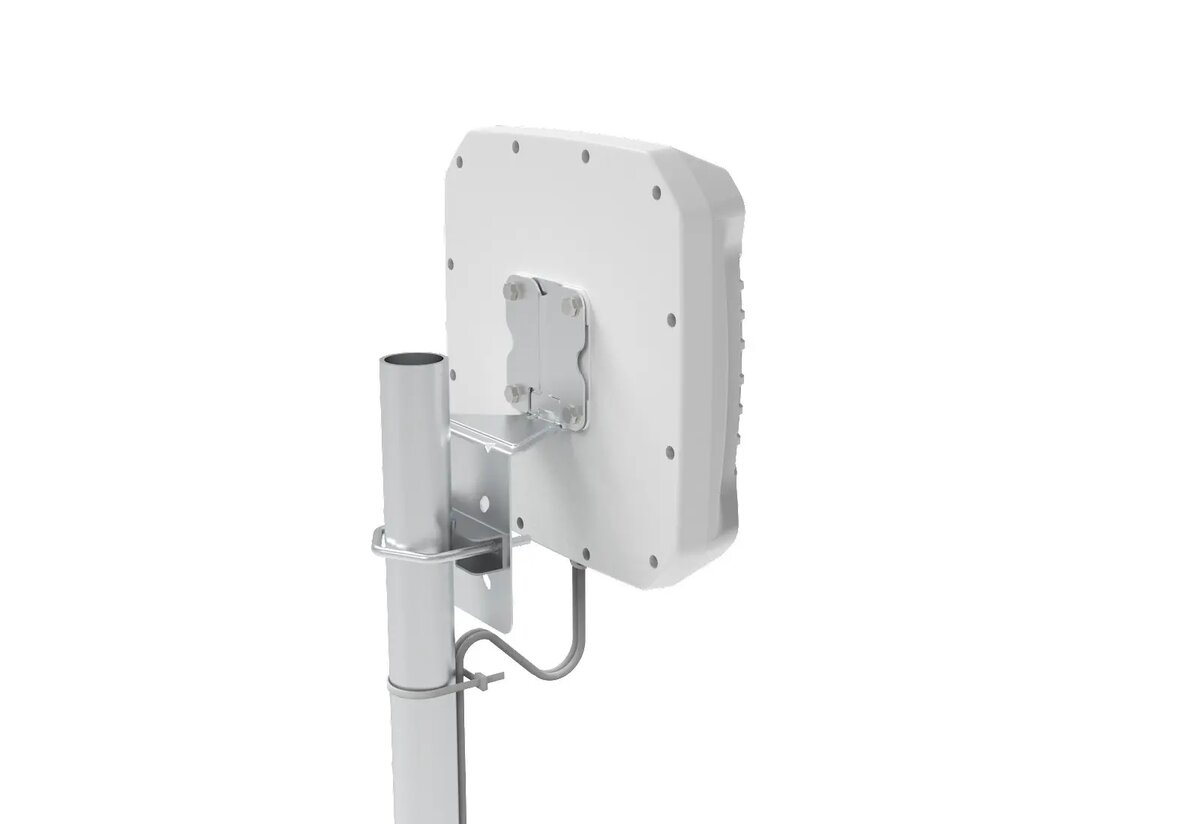
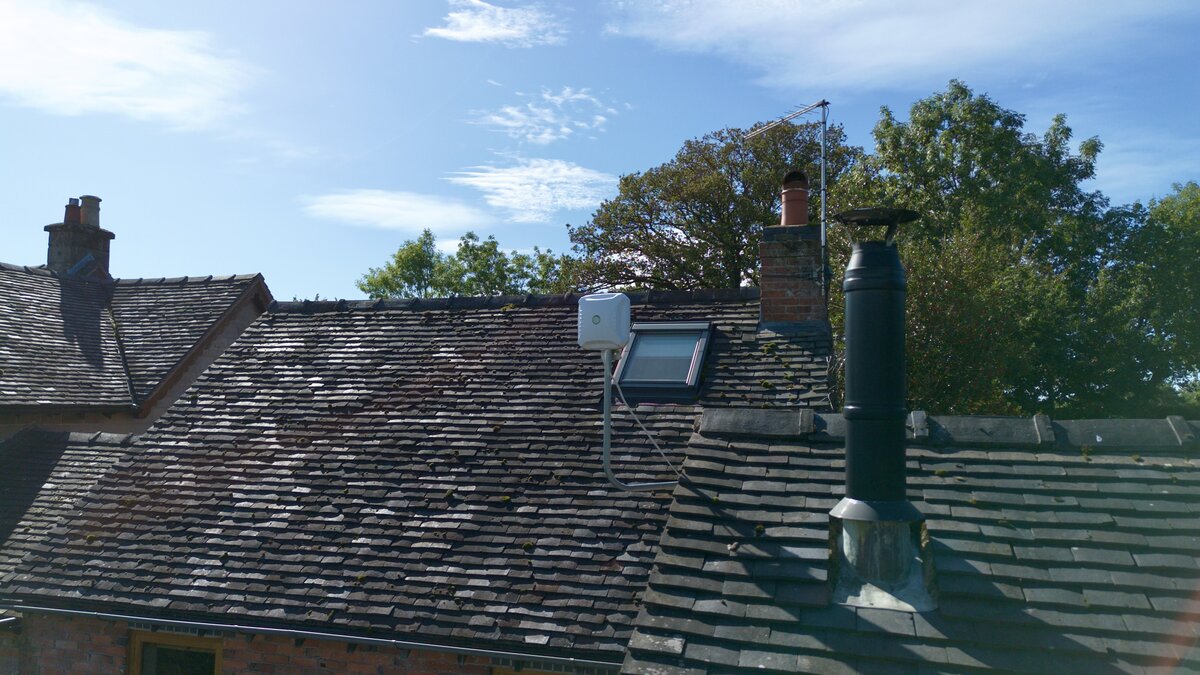
Testing included simple router antennas and external omnidirectional and directional options. A directional external antenna produced the strongest connection for the location.
Mobile broadband was initially introduced using 4G and subsequently upgraded to 5G as local coverage and equipment improved.
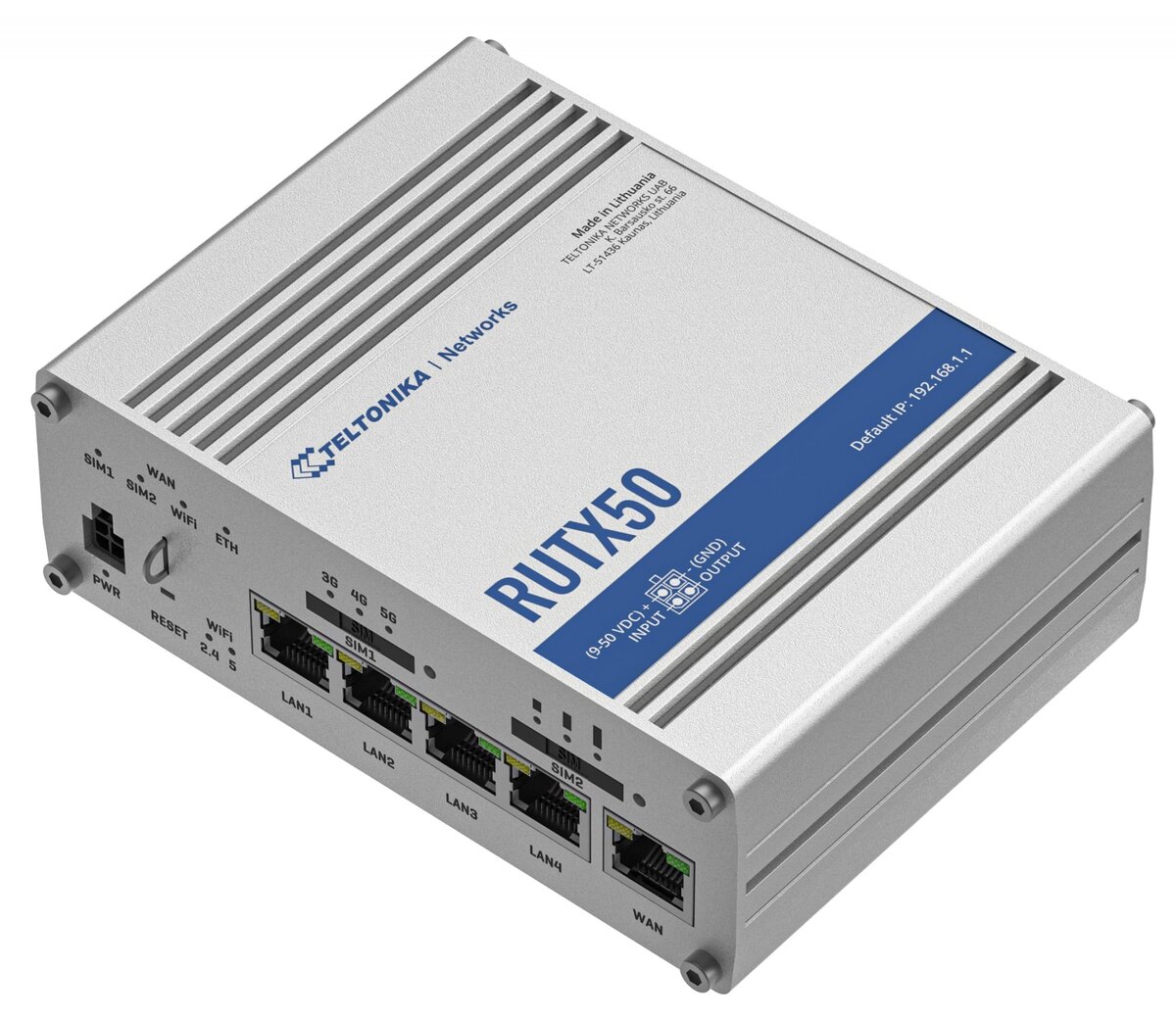
The current system combines an external directional antenna, a 5G broadband connection, a managed wired network and four wired Wi-Fi access points.
The outcome
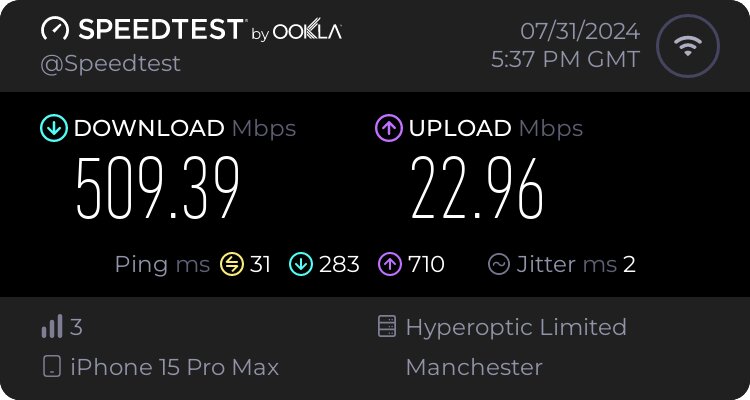
The current mobile connection has produced measured download speeds of approximately 500 Mbps and upload speeds of approximately 25 Mbps, compared with no more than approximately 5 Mbps through the previous fixed-line service.
The property gained access to high-speed internet without waiting for the local fixed-line infrastructure to be upgraded. Its established wired and Wi-Fi foundation has continued to support the property through successive connectivity improvements.
These measurements relate to this particular location. Mobile signal, network demand, building construction and available services vary, so comparable performance cannot be guaranteed elsewhere without appropriate testing.
Have a related project?
Share the site, system or result you need help with.